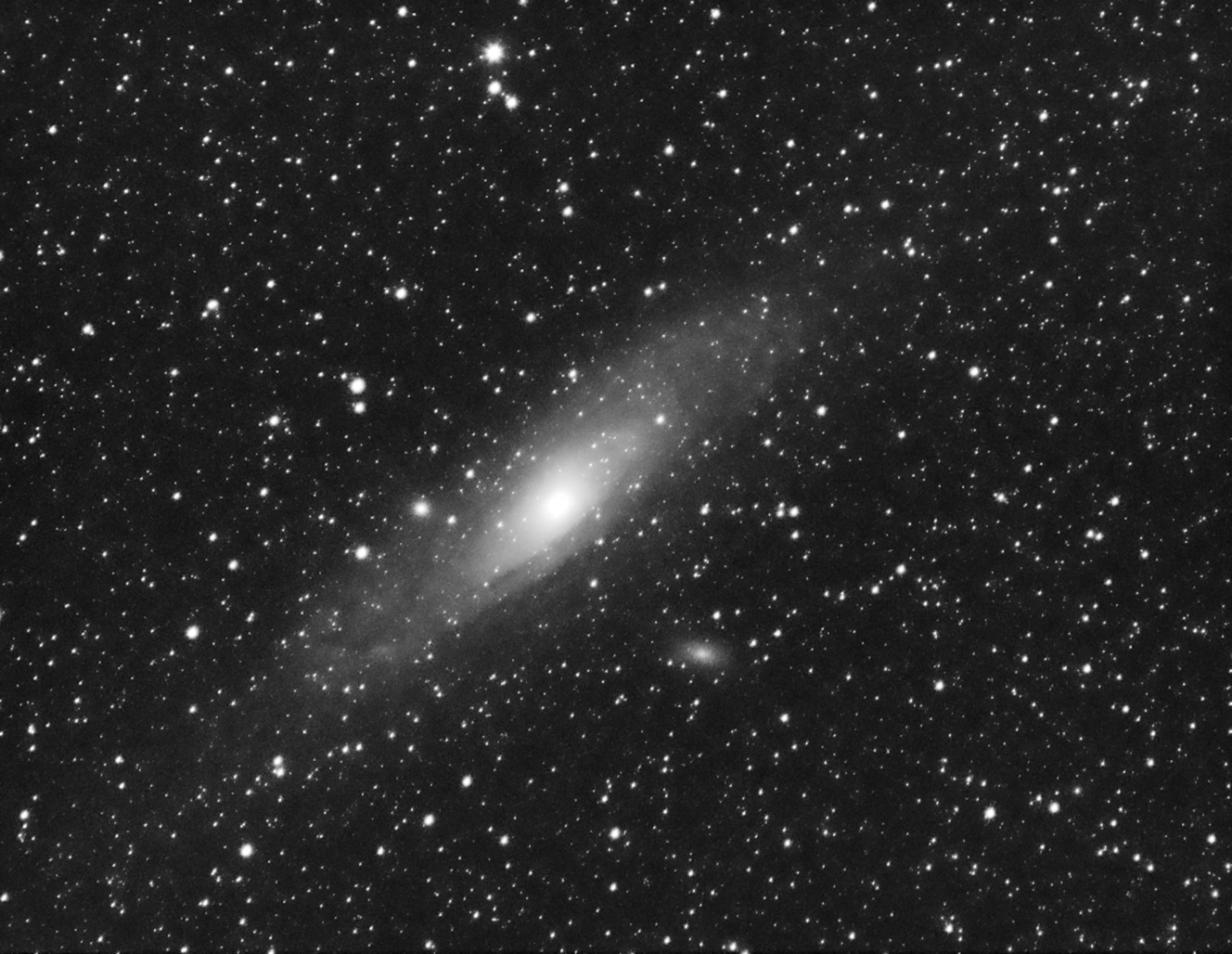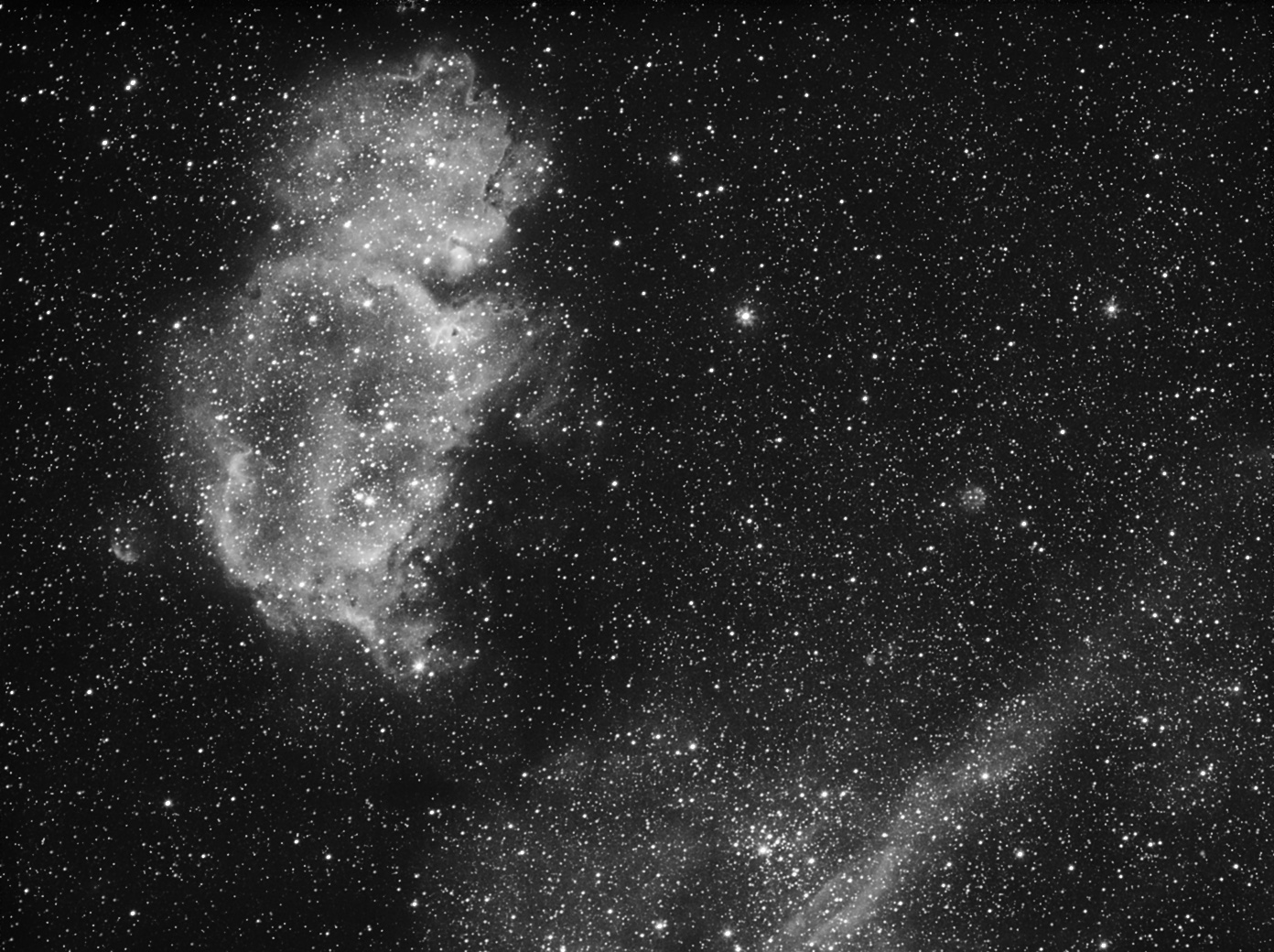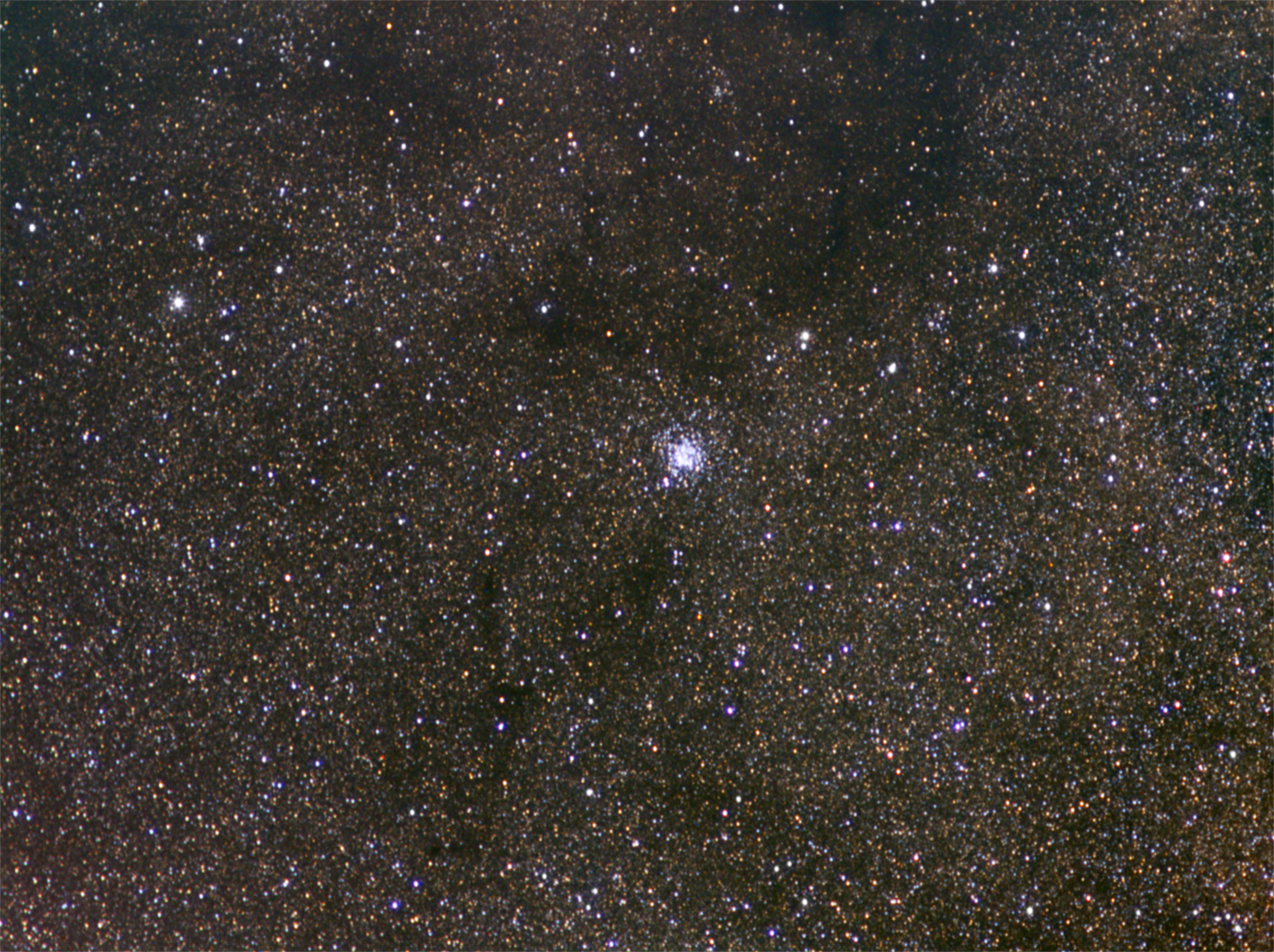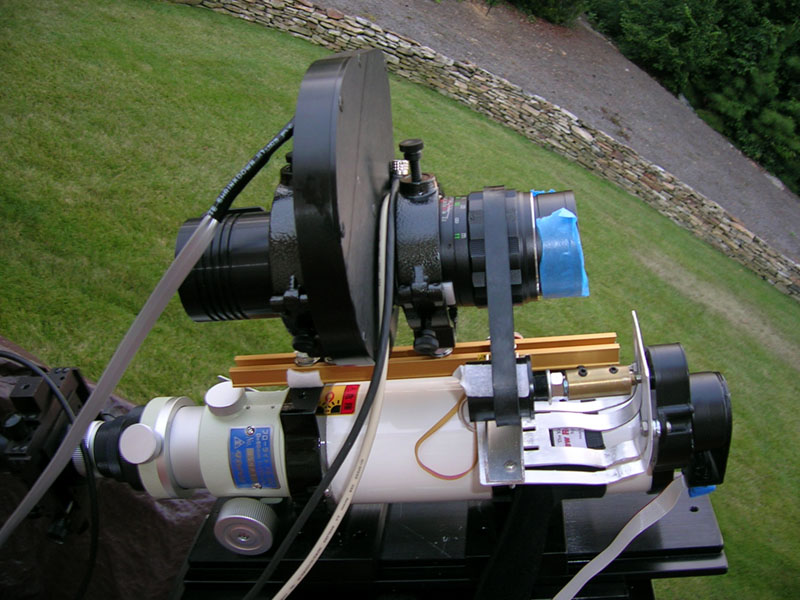
This is a 135mm SLR lens I got off Ebay for cheap. The nice thing about it is that it has T threads on the back, so I could thread it directly onto my FLI filter wheel. I have enough backfocus with the slim filter wheel I am able to image with my SXV-H9 ccd camera. I find I have to stop the lens down to f/4 to get reasonable looking stars. The color correction seems adequate and any bloating on bright stars is easy to fix in Photoshop. I image at 9.8 arc-seconds/pixel, with a FOV of around 3 degrees. It is quite satisfying to have a large FOV and image in the area near the Galactic center.
Because at this image scale stars are heavily undersampled I tried using a method called drizzle to improve the image quality. It was first used on HST images when it was determined the telescope had a serious optical flaw. So far it looks promising.
I made a little bracket from some aluminum stock to mount a Robofocus motor for focusing. The 'pulley' for the robofocus is an old Mogg adapter for my webcam! It just fit perfectly. The belt is for a vacuum cleaning. So far I've just been manually focusing but I think I could get it working with Focusmax if I feel the need.
The camera and lens are mounted on some guidescope rings which I installed into a piece of track I got from a local woodworking store. Its used with T nuts for router tables I think, but it worked great for holding the setup on the rings for my FS-60C (which acts as a guidescope). I've taken up to 15 minute exposures without any differential flexure.
If you are interested in trying this yourself look for a Vivitar or Soligar T4 lens and it will probably be like the
one I found. This
site has alot of info.
Here are some images I've taken with this lens: